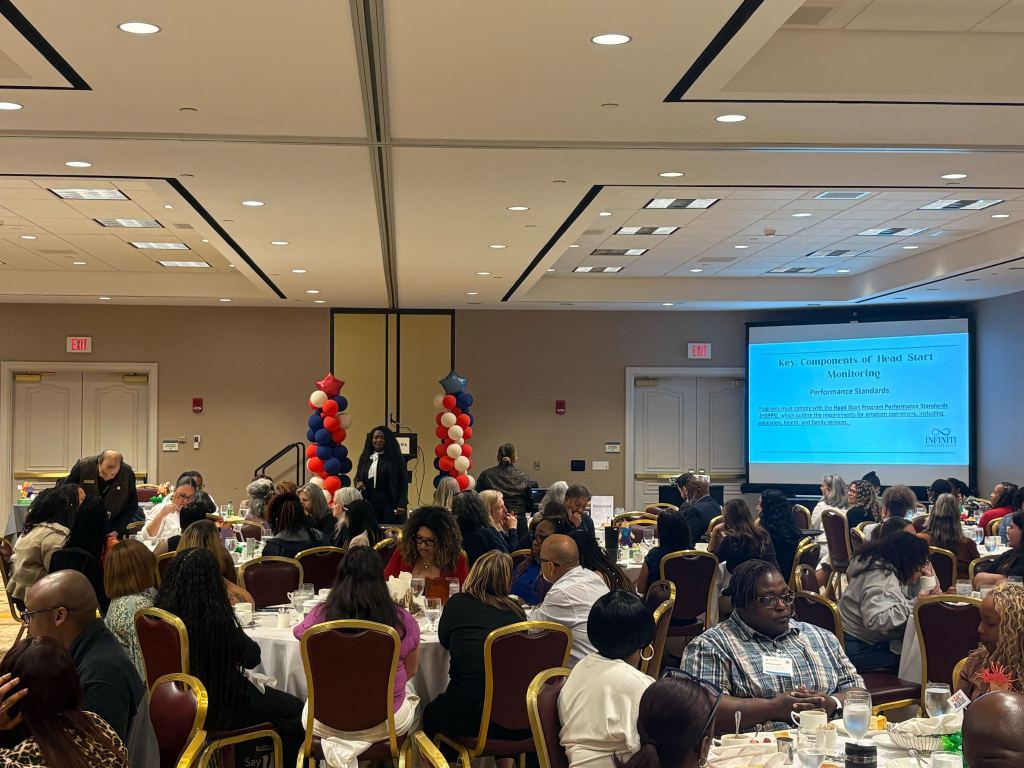
Professional Development


Upcoming Trainings

May – September 2026

Teachstone Trainings

Date/TimeSessions
May 13Toddler: Supporting Positive Behavior at Centers
June 10Family Engagement and Connection
August 19Strategieis to Support Dual Language Learners
Sept 16Pre-K: Analysis and Reasoning at Centers

Format: 45-minute live, virtual sessions
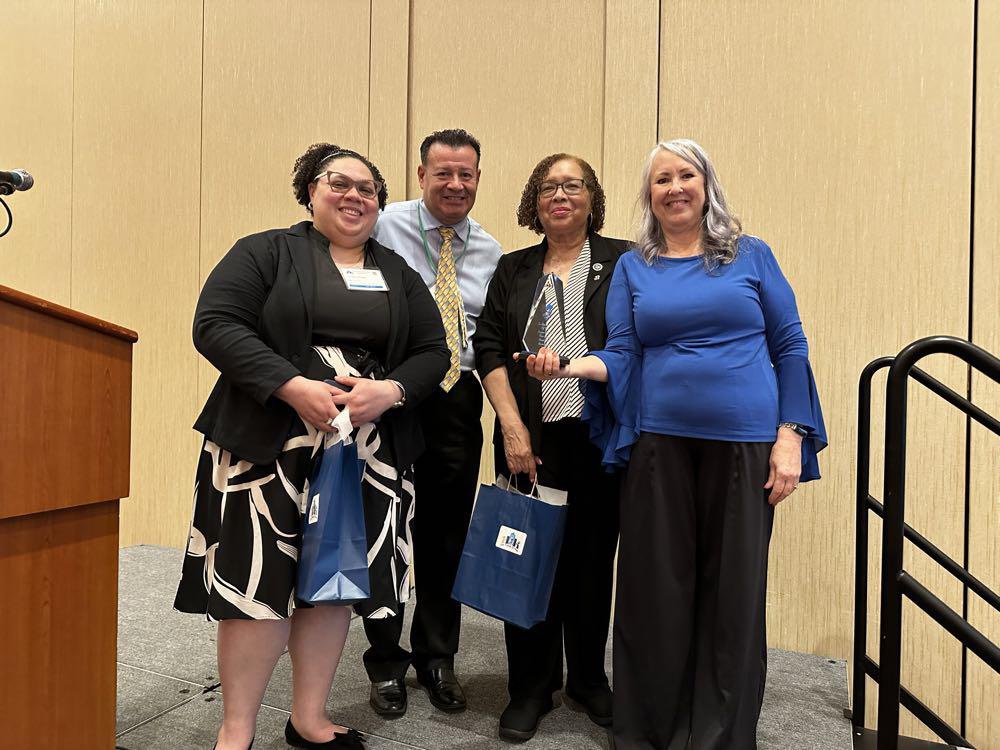
May 2026

2026 New Jersey Head Start Association
Annual Conference & Professional Development

Date: May 18-21, 2026
Location: Tropicana, Atlantic City, NJ

The New Jersey Head Start Association Annual Conference and Professional Development offers Early Childhood Professionals opportunities to participate in Professional Development sessions covering topics in Education, Social Services, Health, Administration, Management, Supervision, Finance, and Human Resources. Throughout the conference, participants will also be able to network and hear the most updated news from representatives from National Head Start Association, and other Head Start experts. 

We welcome Head Start and Early Head Start Directors, Managers, Supervisors, Teachers, Family Advocates, Finance, Human Resources, Parents, and Child Care and Board of Education Partners to participate!

Room Discounted Rates are available through April 17, 2026!

National Family Development Credential® Program’s Instructor & Advisor Training Institute

Date: May 18-21, 2026
Location: Tropicana, Atlantic City, NJ at the 2026 New Jersey Head Start Association Annual Conference
Questions? nationalfdc@uconn.edu

🌟 Ready to take your impact with families to the next level?

Join the National Family Development Credential® (FDC) Instructor & Advisor Training Institute at the NJ Head Start Conference!

This 4-day Train-the-Trainer will certify you to teach the Empowerment Skills for Family Workers curriculum – an interactive, strengths-based approach that helps families build self-reliance and reach their goals.

✨ What you’ll gain:
✔️ Practical, real-world skills to better support families
✔️ Improved communication & effectiveness in your work
✔️ A supportive, hands-on learning environment
✔️ Networking with professionals across the field
✔️ Convenient “train, stay, play” experience in Atlantic City

💰 Early bird rate: $895 (by 3/31)
💰 Regular registration: $995
📌 Application deadline: April 24, 2026

🏨 Discounted room rates available

On-Demand Training

Available On-Demand Trainings:

Carolyn Robinson – Parent Committee Training (English)
This training introduces Parent Committee and Policy Council members to the fundamentals of Head Start program governance and shared decision-making. Participants will learn about the mission of Head Start, the purpose and responsibilities of the Parent Committee and Policy Council, and how parents collaborate with the Governing Board and administrative team. Topics include policy development, budget review, program oversight, election processes, ongoing monitoring, teamwork, and meeting procedures using basic Robert’s Rules of Order. The training emphasizes parent leadership, community voice, accountability, and empowering families to actively influence program direction and quality.

Michael Cupeles – Parent Committee Training (Spanish)
Esta capacitación introductoria está dirigida a padres que participan en los Comités de Padres y el Consejo de Políticas de Head Start. El curso explica el propósito y la estructura de la gobernanza del programa, el papel de los padres en la toma de decisiones compartida y cómo su participación impacta directamente la calidad de los servicios. Los participantes aprenderán sobre responsabilidades clave, procesos de elección, mandatos, reembolsos, monitoreo continuo y trabajo en equipo dentro del modelo de gobernanza compartida. La capacitación también incluye fundamentos de colaboración, liderazgo y procedimientos básicos de reunión para apoyar una participación activa y efectiva.

Michael Cupeles – Governance Board Training (English)
This training provides Governing Board members with a comprehensive overview of their role within the Head Start shared governance structure. Participants will explore legal and fiscal responsibilities, fiduciary duties, ethical governance, and compliance requirements under the Head Start Act. The course covers how boards function in partnership with the Policy Council and management, effective meeting practices (including quorum, voting, and Robert’s Rules of Order), required reports and key documents, and real-life governance scenarios. Emphasis is placed on informed decision-making, accountability, and strengthening board effectiveness to support high-quality Head Start programming.

Michael Cupeles – Governance Board Training (Spanish)
Esta capacitación está diseñada para miembros de la Junta Directiva de Head Start y ofrece una visión integral de su función dentro del modelo de gobernanza compartida. Los participantes aprenderán sobre las responsabilidades legales y fiscales de la Junta, los deberes fiduciarios y éticos, el cumplimiento de las leyes federales y la colaboración con el Consejo de Políticas y la administración. El curso también aborda el funcionamiento eficaz de las reuniones, los informes requeridos, la aplicación básica del Reglamento de Robert y escenarios prácticos de gobernanza. El enfoque principal es fortalecer la toma de decisiones informadas y la responsabilidad para apoyar programas Head Start sólidos y eficaces.

ITERS & ECERS Training Overview

The Infant/Toddler Environment Rating Scale (ITERS) and the Early Childhood Environment Rating Scale (ECERS) are research-based quality assessment tools widely used in early childhood programs to evaluate and strengthen the everyday environments where infants, toddlers, and preschool-aged children learn and grow. These scales help programs examine key aspects of quality — including physical space, materials, routines, and caregiver–child interactions — to ensure environments support children’s developmental needs, health, safety, and positive relationships.

ITERS (Infant/Toddler Environment Rating Scale) focuses on quality in care settings for children from birth through approximately age 2 or 3, emphasizing nurturing interactions and developmentally appropriate environments for the youngest learners.
ECERS (Early Childhood Environment Rating Scale) is designed for preschool and kindergarten classrooms, assessing how well environments support learning opportunities, play, engagement, and overall program quality for children ages 3–5.

To support ongoing quality improvement and professional growth, NJHSA will offer the following trainings:

  • ITERS Initial Training
  • ITERS Recalibration Training
  • ECERS Initial Training
  • ECERS Recalibration Training

Participants and programs interested in these trainings are invited to submit their information via our online form so we can begin planning logistics and scheduling.

Dates: To Be Determined – Spring 2026 – Depends on Interest / Sign Ups
Location: To Be Determined


Frequently Asked Questions (FAQ)

What can participants expect during the training?

The reliability testing format integrates a range of effective adult learning strategies, including hands-on activities and small-group collaboration.

Participants will engage in:

  • Classroom observations in early childhood settings to examine environments and observe children’s developmental levels firsthand
  • Small-group discussions and activities
  • Practical scoring exercises and debrief sessions

What is the time commitment for the training?

The training spans four full days, from 8:30 a.m. to 4:30 p.m. each day.

  • A lunch break is scheduled after the morning observation and before the afternoon debrief
  • If scoring is not complete, participants may need to use part of their lunch break to finish
  • Participants should plan for daily travel time, which may be up to one hour each way in high-traffic areas

Because these are full, demanding days, participants are strongly encouraged not to schedule additional work commitments during this time.


What are the requirements for certification and reliability?

To be recognized as a reliable user of the scales, participants must achieve an average reliability score based on three observations conducted by certified ERSI trainers.

Required benchmarks:

  • 80% or higher – Technical Assistance level
  • 85% or higher – Assessor level
  • 90% or higher – Anchor level

ERSI provides a letter of certification documenting the participant’s reliability score. This serves as evidence of how accurately the ERS is applied.

Maintaining strong reliability standards ensures fairness for centers, parents, and stakeholders, especially in high-stakes situations where results may impact funding, stipends, or professional development opportunities.


How long is certification valid?

Certification is valid for one year.

Because reliable users can experience observer drift (loss of reliability over time), annual recalibration is required to maintain certification.

Participants receive documentation detailing their reliability performance and certification status.


When is recalibration required?

Recalibration is required after one year. Participants must complete the recertification process to maintain reliability status.


What does the recalibration process involve?

The recalibration process mirrors the initial certification and requires participants to meet the same reliability standards.

  • Morning observations: 8:30 a.m. – 11:30 a.m.
  • Debriefing sessions: Begin at 1:30 p.m. and last approximately 3–4 hours

Participants complete guided observations in a classroom setting with children present, followed by a comprehensive debrief and feedback session with an ERSI trainer.


How can I prepare for the reliability testing?

Successful participants typically:

  1. Practice observational skills in classrooms and become familiar with the scale
  2. Read the scale daily, including all additional notes
  3. Download the most recent notes from www.ersi.info and integrate them into the scale
  4. Review ERS materials and follow debriefing procedures
  5. Plan to spend 1–3 hours outside of daily sessions preparing for observations

This is a college-level course, and preparation is essential.


What strategies should I use to be successful?

  • Gather all materials, including directions to your observation site
  • Arrive on time
  • Score most indicators during the observation, not afterward
  • Take notes during debrief sessions and apply feedback to future observations
  • Ask questions to better understand scale requirements

What is a consensus score?

During the debriefing session, participants engage in a discussion to determine the appropriate score for each indicator.

  • Participants share evidence observed during the classroom visit
  • The ERSI trainer facilitates discussion and provides clarification
  • The final consensus score is considered the accurate and valid score for each item

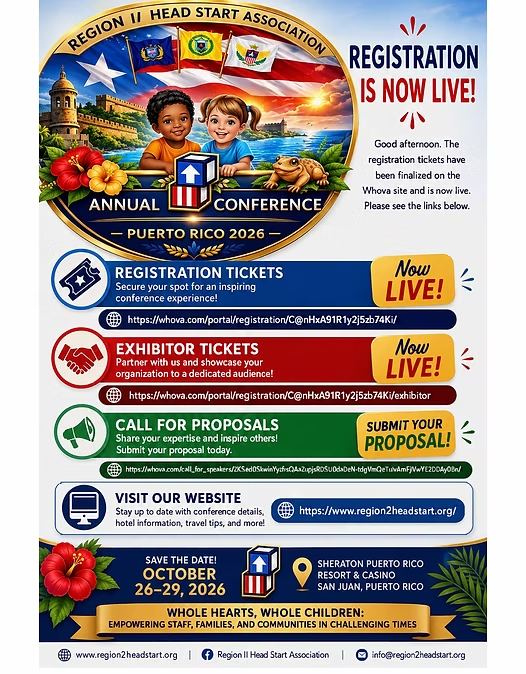
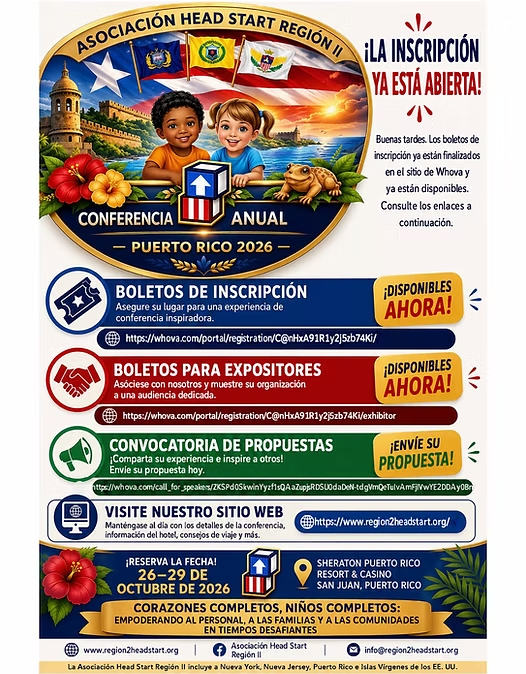
Region II Head Start Annual Conference

October 26 – 29, 2026
San Juan, Puerto Rico
More information coming soon